Headless SEO is a modern approach to search engine optimization that works with headless CMS platforms. We no longer depend only on one website to share content. Users now search and read content on apps, social platforms, smart devices, and marketplaces.
It helps us optimize content across all these channels. It focuses on flexibility, speed, and structured data while still following search engine rules.
- Supports multiple platforms from one content source
- Helps reach users beyond traditional websites
- Works well with modern search behavior
- Requires a different SEO planning approach
Key Takeaways
- We use headless SEO to optimize content across websites, apps, and digital platforms.
- We separate content creation from design using a headless CMS structure.
- We focus on content modeling instead of building fixed web pages.
- We reuse the same content across multiple channels to meet user intent.
- We rely on APIs and integrations instead of traditional SEO plugins.
- We need strong collaboration between SEO and development teams.
- We achieve better scalability, speed, and flexibility with proper planning.
What Is a Headless CMS?
A headless CMS is a content management system where content creation is separated from content display. We manage content in one place and deliver it anywhere using APIs. The system does not decide how or where the content appears.




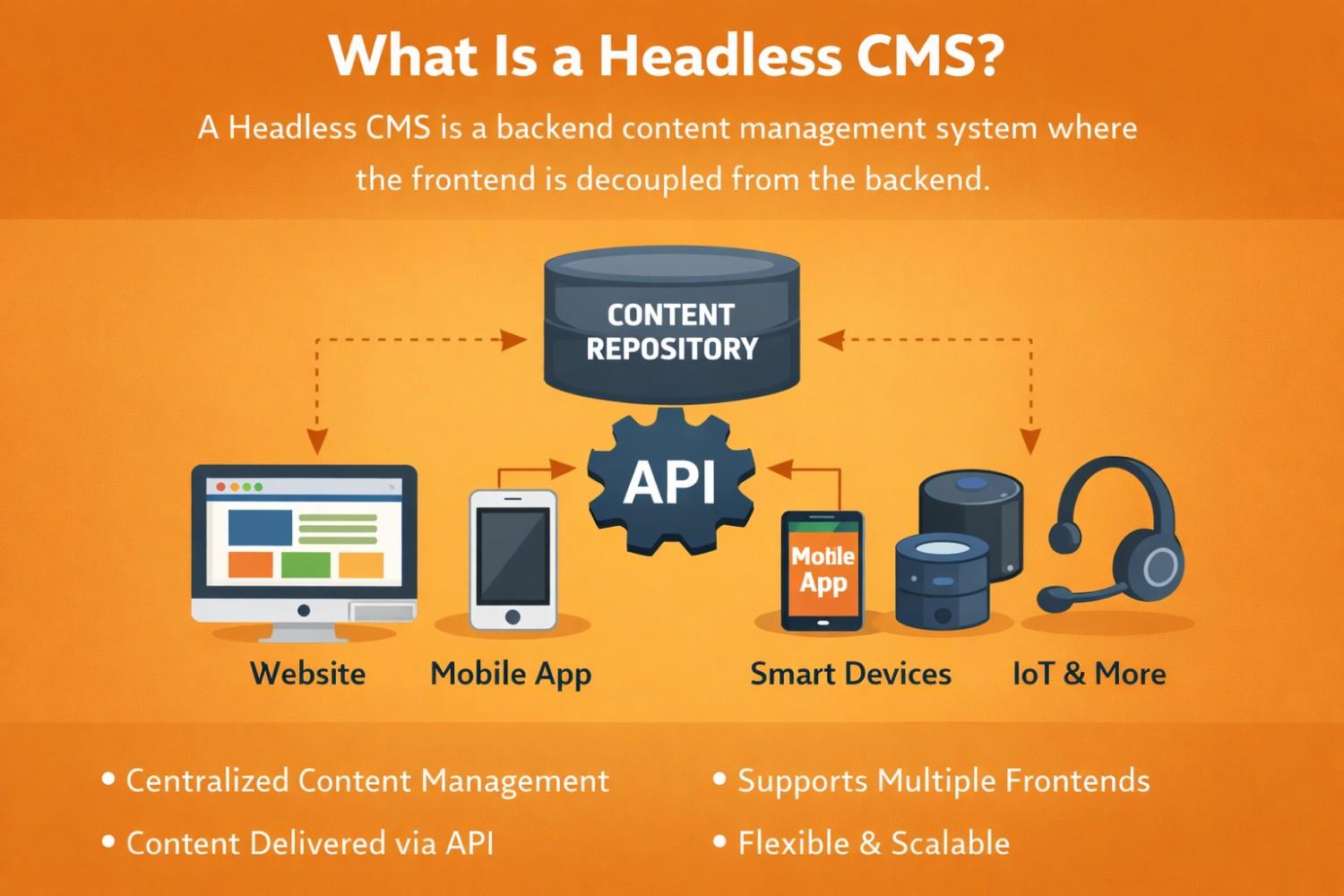
This setup helps us publish the same content on websites, mobile apps, smart devices, or third-party platforms without rewriting it every time.
- Content and design are separate
- Uses APIs for content delivery
- Supports many platforms at once
- Offers more control over content use
Understanding a Traditional CMS
A traditional CMS combines content management and presentation in one system. We create content, manage images, and publish pages within the same platform. WordPress is a common example.
This setup works well for websites, but it limits how content is reused on other platforms. As user behavior changes, this structure becomes less flexible for modern content needs.
- Content and design are tightly connected
- Mostly focused on websites
- Easy to use for beginners
- Limited multi-platform support
Core Components of a Traditional CMS
A traditional CMS includes three main parts that work together closely. We have the database where content is stored. We have the admin panel where content is edited.
Finally, we have the front end where users see the content. Because all parts depend on each other, changes in one area often affect the whole system.
- Database stores all content
- Admin panel manages edits
- Front end displays pages
- Changes impact the entire system
Why the Need for a Headless CMS Arose?
User behavior has changed fast. We no longer consume content only on websites. People use mobile apps, smartwatches, voice assistants, and social platforms.
A traditional CMS struggles to support all these channels. A headless CMS solves this issue by allowing us to create content once and publish it everywhere without limits.
- Users access content on many devices
- Websites are no longer the only channel
- Faster content distribution is required
- Flexibility becomes essential
How a Headless CMS Works?
A headless CMS stores content in a central database and delivers it using APIs. We control how content appears by connecting it to different front ends. Each platform requests only the data it needs.
This method improves speed and consistency. It also helps teams work independently on content and design without blocking each other.
- Central content storage
- API-based content delivery
- Independent front-end systems
- Better performance and control
Difference Between Traditional CMS and Headless CMS
The main difference lies in flexibility. A traditional CMS is page-based, while a headless CMS is content-based. We design pages in advance in traditional systems.
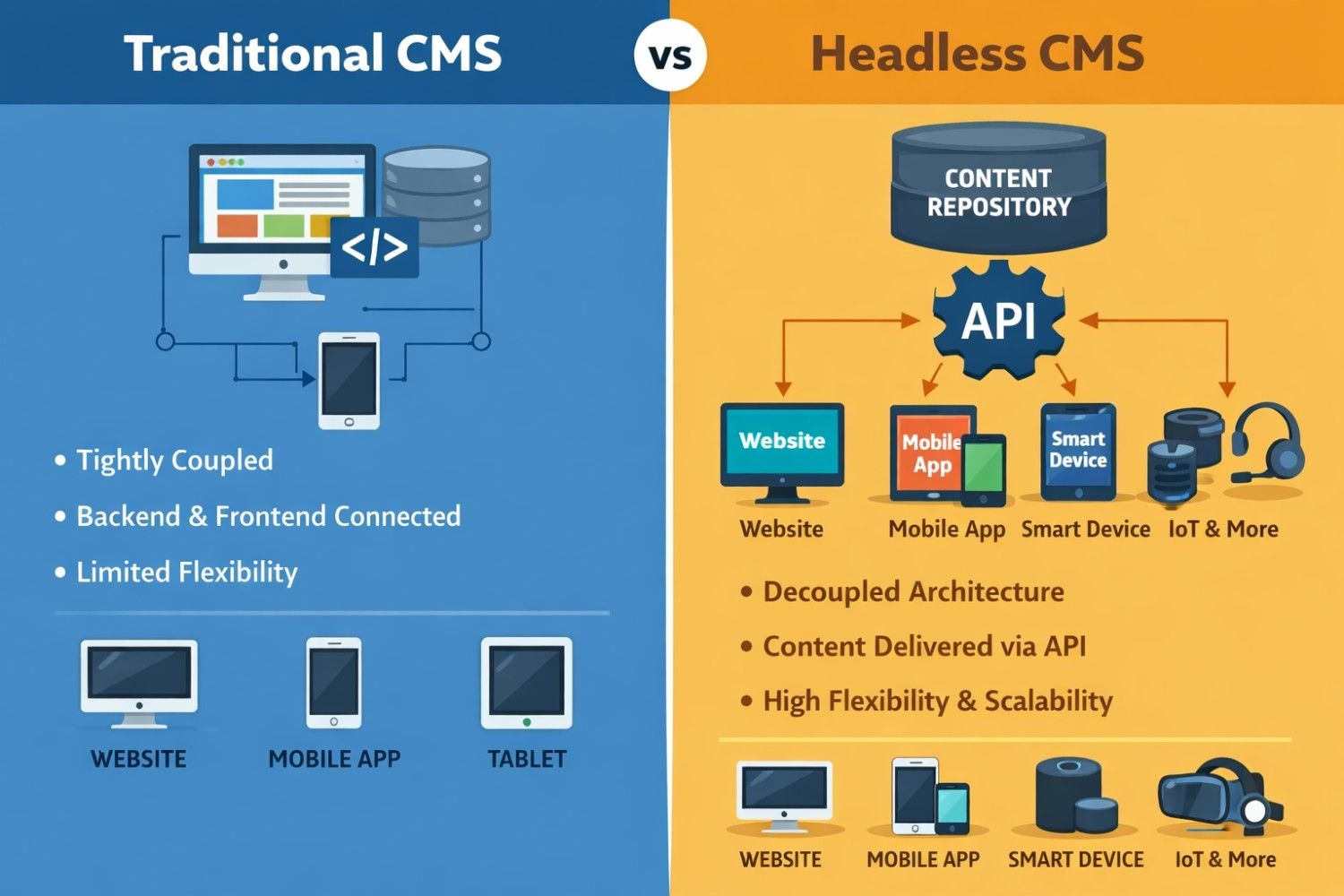
In headless systems, we design content structures first. This shift changes how we plan SEO, content creation, and user experience across multiple platforms.
- Traditional CMS builds pages
- Headless CMS builds content blocks
- Headless allows multi-channel publishing
- SEO planning becomes more strategic
What Are the Advantages of Using a Headless CMS?
A headless CMS offers strong advantages when content reuse is important. We can update content once and reflect changes everywhere instantly. It also works well for large systems, global websites, and e-commerce platforms.
When speed, scalability, and integration matter, headless CMS becomes a powerful option.
- Faster content updates
- Easy multi-channel reuse
- Better scalability
- Strong system integration
Is a Headless CMS Better for SEO?
It is not automatically better for SEO. The results depend on how well we plan and implement SEO strategies. When done correctly, it can improve speed, structure, and user experience.
When done poorly, it can cause indexing and tracking issues. SEO success depends on technical setup and content strategy.
- SEO depends on implementation quality
- Requires technical SEO planning
- Performance can improve rankings
- Poor setup can hurt visibility
Headless CMS for Content Reuse
Content reuse is one of the biggest benefits of headless systems. We can publish the same content across websites, apps, emails, and social platforms. This reduces duplication and ensures consistency. It also saves time for content teams and improves brand messaging across all channels.
- One content source
- Consistent messaging everywhere
- Reduced content duplication
- Faster publishing workflows
Headless CMS for International SEO
International SEO becomes easier with a headless CMS. We can manage multiple languages, regions, and versions from one system. Content models allow us to connect translations correctly.
This helps search engines understand regional targeting and improves user experience for global audiences.
- Central language management
- Better regional targeting
- Improved hreflang handling
- Consistent global structure
SEO Differences in a Headless CMS Environment
SEO in a headless CMS works differently from traditional systems. We do not rely on built-in tools or plugins. Instead, we control SEO through custom development and integrations.
This gives us more power but also more responsibility. Every SEO element must be planned carefully.
- Less reliance on plugins
- More technical control
- Higher planning effort
- Greater flexibility
Content Modeling in Headless SEO
Content modeling means defining content types before building pages. We think about what the content is, not where it appears. This approach helps us reuse content across channels.
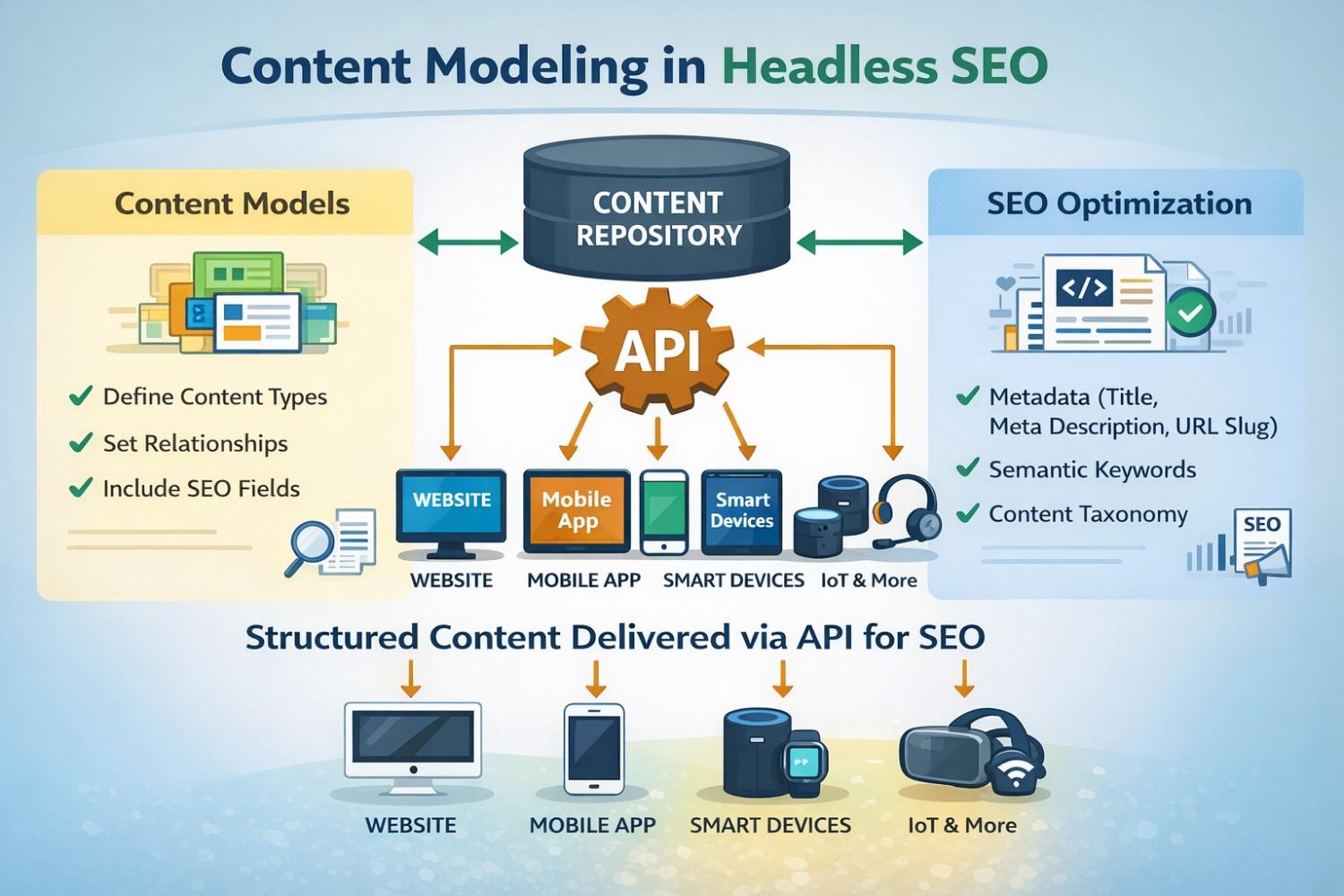
It also improves consistency and structure, which benefits SEO and user understanding.
- Focus on content structure
- Channel-agnostic approach
- Improves reuse and clarity
- Supports SEO scalability
Example of Content Modeling
Let us consider a music venue. We manage artists, events, tickets, and merchandise as separate content types. Each type has its own attributes. These types connect logically.
This model allows us to display the same event details on websites, apps, and partner platforms without rewriting content.
- Clear content relationships
- Reusable data blocks
- Easy multi-platform publishing
- Better content organization
Omnichannel Content Reuse
Users search on many platforms today. We must meet them where they are. Headless CMS supports omnichannel publishing by using one content source.
We deliver content to search engines, social platforms, and apps without changing the core content. This helps satisfy modern user intent.
- Supports multiple discovery platforms
- One content source
- Better reach and visibility
- Consistent user experience
SEO Challenges with Omnichannel Content
Omnichannel publishing requires careful planning. We must ensure content remains optimized for each platform. Search intent differs across channels. Metadata, formatting, and delivery must match platform needs.
Without planning, content performance may drop despite wide distribution.
- Platform-specific optimization needed
- Search intent varies
- Metadata must be managed
- Requires strong strategy
Limited Plugin Support in Headless SEO
Headless CMS platforms do not rely on traditional SEO plugins. We cannot install tools like Yoast easily. Instead, we connect external systems for SEO features. This approach offers flexibility but requires development support. SEO becomes more technical and less automated.
- Fewer ready-made plugins
- Custom integrations required
- Developer involvement needed
- More control over SEO logic
Role of Development Teams in Headless SEO
Development teams play a key role in headless SEO success. We depend on them to implement structured data, metadata handling, rendering, and tracking.
SEO teams must work closely with developers. Clear communication ensures search engines can crawl, index, and rank content correctly.
- Strong SEO-developer collaboration
- Technical SEO implementation
- Custom SEO features
- Better long-term results
Final Words on Headless SEO
Headless SEO is powerful but not simple. It offers flexibility, speed, and scalability when planned correctly. We must understand content modeling, technical SEO, and omnichannel strategy. For growing brands and complex systems, headless SEO can deliver strong results when supported by the right team and strategy.
- Not a one-size solution
- Requires planning and skills
- Ideal for complex projects
- Future-ready SEO approach
Headless SEO FAQs
What is Headless SEO in simple words?
Headless SEO is a way to optimize content that is not tied to one website. We manage content in one place and share it across websites, apps, and other platforms. SEO rules still apply, but the setup is more flexible and technical.
Why is Headless SEO becoming popular today?
Headless SEO is growing because users no longer search only on websites. They use mobile apps, smart devices, and social platforms. Headless SEO helps us reach users on all these channels from one content source.
How is Headless SEO different from traditional SEO?
Traditional SEO mainly focuses on websites built with page-based systems. Headless SEO focuses on content that can appear anywhere. We plan SEO at the content level instead of the page level.
What is a headless CMS and how does it support SEO?
A headless CMS stores content separately from design. It sends content using APIs. This helps SEO by improving speed, content reuse, and structure when implemented correctly.
Is a headless CMS automatically better for SEO?
No, it is not automatic. Headless CMS can improve SEO only if technical setup and content strategy are done properly. Poor implementation can cause indexing and tracking problems.
Why does content modeling matter in Headless SEO?
Content modeling helps us define content types clearly. This makes content reusable across platforms. It improves consistency, structure, and scalability, which supports better SEO performance.
Can we reuse content easily with Headless SEO?
Yes, content reuse is a major benefit. We can publish the same content on websites, apps, emails, and social platforms without rewriting it. This saves time and keeps messaging consistent.
How does Headless SEO help with international SEO?
Headless CMS makes it easier to manage multiple languages and regions. We can connect translations correctly and improve hreflang handling. This helps search engines show the right content to the right users.
What SEO challenges come with a headless setup?
Headless SEO needs more planning. We cannot depend on ready-made plugins. Metadata, structured data, and tracking must be handled through custom development and integrations.
Who plays an important role in Headless SEO success?
Development teams play a key role. SEO teams must work closely with developers to implement technical SEO elements. Good collaboration helps search engines crawl, index, and rank content correctly.