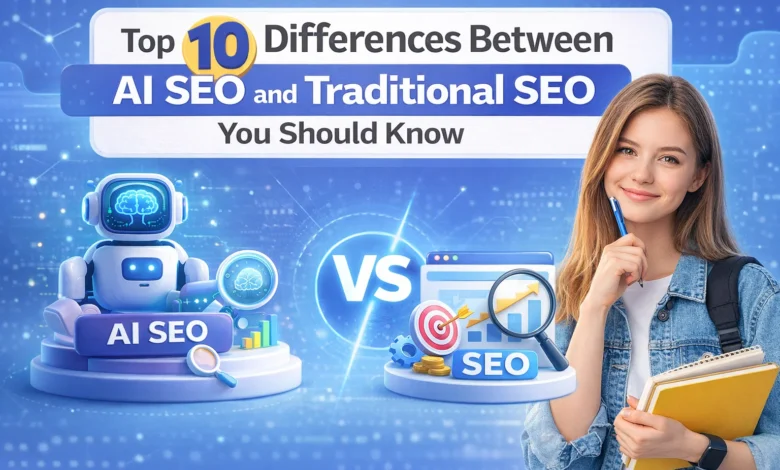
Do you want to know how AI SEO differs from traditional SEO today? This change matters because search engines change fast and businesses must adapt strategies.
AI SEO uses automation data and learning to improve rankings with smarter decisions.
Traditional SEO depends on manual research fixed rules and slower optimization processes.




Knowing these differences helps marketers choose better tools save time and increase results.
It also supports long term growth by matching modern search behavior and user intent.
Let us discuss everything in detail in this useful article together now penned down by the best SEO company in Delhi.
Automation vs Manual
AI SEO focuses on automation to handle tasks quickly and accurately. It uses smart tools to analyze data without constant human effort.
Traditional SEO depends more on manual work done by experts. People must research keywords check results and adjust strategies themselves.
This manual process usually takes more time and requires regular attention. Automation in AI SEO reduces effort while improving speed and consistency.
It helps businesses manage SEO tasks easily even with limited teams. Overall automation makes AI SEO more efficient than traditional SEO methods.
Faster Data Analysis
This can analyze large data sets very fast today. It processes keywords traffic trends and behavior in seconds online.
Traditional SEO studies data manually which takes more time overall. Human analysis limits speed accuracy and scale during optimization work.

These tools scan millions of signals without getting tired. Faster data analysis helps businesses make smarter SEO decisions daily.
Quick insights improve rankings planning and results across competitive markets. This speed advantage clearly separates AI SEO from traditional SEO.
Fixed Keywords
Traditional SEO relies heavily on fixed keyword research methods proven. Experts manually select keywords based on volume competition and experience.
These methods change slowly and often miss new search behavior. AI SEO updates keyword strategies automatically using real time data.
Traditional SEO needs repeated research when trends shift or markets evolve. Manual keyword planning increases effort and delays optimization results for websites.
Fixed keyword methods reduce flexibility compared to smarter AI driven SEO.
Understanding this difference helps businesses choose better long term SEO strategies.
Predictive Trends
This uses machine learning to predict search trends accurately. These systems study past data to understand changing user behavior.
Patterns help tools forecast keywords topics and content demand early. Traditional SEO reacts later after trends already appear online everywhere.

Machine learning improves predictions continuously without manual testing efforts needed. This helps brands plan content strategies before competitors respond quickly.
Traditional methods depend on guesses experience and slower market observation. Predictive AI SEO gives businesses a clear advantage in visibility.
Smart Optimization
This makes content optimization smarter by using advanced data analysis. It studies user intent search patterns and engagement signals automatically.
Traditional SEO optimizes content manually based on basic rules guidelines. AI tools suggest improvements for titles structure keywords and readability.

These suggestions update quickly when search engines change ranking behavior. Manual optimization takes more time and may miss important content opportunities.
This type of digital marketing helps create relevant content that matches what users want. Smarter optimization improves rankings engagement and overall website performance results.
Time Efficiency
Traditional SEO takes more time to test strategies and measure results. SEO Experts wait weeks to see changes after making optimization updates.
This slow process delays growth and reduces chances for quick improvements. AI SEO adjusts strategies faster using real time performance data.

Automation allows constant testing without long waiting periods for results. Faster adjustments help websites respond quickly to search engine changes.
Traditional methods need patience manual checks and repeated revisions over time. Time efficiency makes AI SEO better for competitive digital markets.
User Intent
It understands user intent by analyzing behavior patterns and search context. It studies clicks time spent queries and engagement signals together.
Traditional SEO focuses more on keywords than real user needs. This approach may rank pages but fail to satisfy visitors fully.

This aligns content with intent such as information buying or navigation. Better intent matching improves engagement trust and long-term search performance.
Traditional methods struggle to adjust intent understanding quickly across changes. This continuously learns making intent understanding more accurate over time.
Standard Rules
Traditional SEO follows standard rules created from older search engine practices. These rules change slowly and depend on past updates and guidelines.
Experts apply these methods manually based on experience and fixed frameworks. AI SEO does not rely only on traditional predefined optimization rules.
It adjusts strategies using live data patterns and continuous learning systems. Traditional rules may limit flexibility when search engines update algorithms frequently.
This adapts faster without waiting for new rule-based practices. This difference affects performance growth and long-term search visibility.
Quick Adaptation
This adapts quickly when search engines update their algorithms frequently. It tracks changes automatically and adjusts strategies without manual intervention.
Traditional SEO requires experts to study updates before making changes. This delay can reduce rankings and traffic during adjustment periods.
AI SEO tools respond in real time using continuous data monitoring. Faster adaptation helps websites maintain visibility and performance consistently.
Manual methods struggle to keep pace with frequent algorithm changes. This adaptability makes AI SEO more reliable for long term success.
Human Effort
Traditional SEO requires more human effort for regular optimization tasks. Experts must monitor rankings update content and fix website designing issues manually.
This approach depends heavily on time skills and continuous attention. AI SEO reduces manual effort by automating repetitive optimization processes.
Automation handles analysis updates and improvements without constant human involvement.
Less human effort allows teams to focus on strategy creativity. Traditional SEO becomes harder to scale because effort increases steadily. This supports scaling easily with limited resources and workforce.
FAQS
What is the main difference between AI SEO and traditional SEO?
AI SEO uses automated tools and data analysis, while traditional SEO relies on manual efforts and experience. Both aims to improve search rankings.
How does AI SEO handle keyword research differently?
AI SEO tools analyze large data sets quickly. Traditional SEO research takes more time and depends on human judgment.
Is content optimization faster with AI SEO?
Yes, AI SEO tools suggest content improvements instantly. Traditional SEO requires manual reviews and gradual content updates.
Does AI SEO provide more accurate insights?
AI SEO offers data-driven insights based on trends and patterns. Traditional SEO depends on observations and past performance.
How do AI SEO and traditional SEO differ in competitor analysis?
AI SEO tracks competitors automatically in real time. Traditional SEO analyzes competitors manually and less frequently.
Can AI SEO adapt faster to algorithm changes?
Yes, AI SEO tools adjust strategies quickly using real-time data. Traditional SEO needs more time to react and test changes.
Is traditional SEO still important today?
Yes, traditional SEO provides strategic thinking and creativity. Combining it with AI SEO delivers better long-term results.
Which approach is more cost-effective, AI SEO or traditional SEO?
AI SEO reduces time and labor costs through automation. Traditional SEO may cost more due to manual work requirements.
Do AI SEO tools replace human SEO experts?
No, AI tools support experts but cannot replace human creativity. Human strategy remains essential for effective SEO campaigns.
Should businesses choose AI SEO over traditional SEO?
Businesses benefit most by using both approaches together. This combination ensures speed, accuracy, and sustainable growth.