Even with AI tools growing fast, Google continues to dominate search engines. As of March 2026, over 66% of people rely on Google for informational queries. Businesses still depend on top search rankings for visibility and lead.
Rank tracking software helps monitor keywords on search engines over time. These tools give marketers updates, competitor insights, and SEO recommendations. It makes it easier to improve website performance and measure marketing ROI.
- Google dominates search engine market
- Rankings impact business visibility
- Software tracks keyword positions
- Provides competitor analysis data
- Supports marketing decision-making
Key Takeaways-
- Rank tracking software helps monitor website keyword performance.
- Free tools are best for small campaigns and beginners.
- Paid tools provide daily updates, competitor tracking, and local insights.
- Cloud trackers offer access from anywhere; desktop trackers suit offline use.
- Accurate and reliable data is essential for SEO decisions.
- Track mobile, local, and multi-location keyword rankings.
- Integration with marketing platforms improves workflow and reporting.
What Is Rank Tracking Software?
Rank tracking software helps businesses track their position on search engines for specific keywords. Instead of manually checking rankings, these tools automate the process across hundreds or thousands of keywords.
The software collects data, shows historical trends, and generates reports to help teams plan SEO campaigns.
Popular tools, like HubSpot SEO, display which keywords drive traffic and where pages rank, making it easier to focus on content that improves search visibility.
- Monitors keyword positions online
- Tracks multiple keywords automatically
- Provides SEO performance dashboards
- Highlights top-performing content
- Offers historical ranking reports
How Rank Tracking Tools Work?
Modern rank trackers simulate searches from different locations and devices without triggering Google penalties. They gather ranking data for each keyword and generate reports showing changes over time.
Many platforms update daily or weekly to ensure marketers see accurate trends. Advanced tools can also separate issues caused by content versus technical SEO problems. It helps teams prioritize fixes efficiently. This enables better strategy planning and quicker adjustments to maintain rankings.
- Tracks rankings across devices
- Monitors location-specific results
- Updates rankings daily or weekly
- Differentiates content and technical issues
- Generates actionable SEO reports
Types of Rank Trackers: Cloud vs. Desktop
Cloud-based rank trackers run on remote servers, giving teams access anywhere with internet. Popular cloud tools include SEMRush, Ahrefs, HubSpot SEO, and Moz. Desktop trackers install directly on a computer and can work offline.
They are suitable for agencies needing unlimited keyword tracking without recurring fees. SEO PowerSuite’s Rank Tracker is a well-known desktop option. The choice depends on team needs, accessibility, and budget.
- Cloud trackers accessible anywhere
- Desktop trackers work offline
- Cloud tools update automatically
- Desktop tools track unlimited keywords
- Choose based on team needs
Who Needs Rank Tracking Software?
SEO agencies, in-house teams, and local businesses all benefit from rank trackers. Agencies use them to monitor campaigns, report to clients, and show ROI. In-house teams track daily fluctuations, competitors, and algorithm updates.
Local businesses need tools for “near me” searches and Google Maps rankings. Essentially, any business with an online presence can gain actionable insights to improve visibility.
- SEO agencies track client campaigns
- In-house teams monitor rankings daily
- Local businesses track location results
- Supports strategy and ROI tracking
- Useful for all online businesses
What Makes a Great Rank Tracker Tool?
The best rank trackers provide accurate results, competitor comparison, and actionable SEO guidance. They track mobile and desktop rankings, provide local insights, and offer integration with other platforms.
Key features include reliable updates, API access for reporting, and the ability to track multiple competitors. A great tool helps marketing teams focus on high-impact optimizations and avoid wasted effort.
- Accurate keyword position tracking
- Competitor performance comparison
- Local and mobile SEO tracking
- API access for reporting
- Actionable optimization recommendations
Free vs. Paid Rank Tracking Software
Free rank trackers are ideal for small businesses tracking a few keywords. Paid solutions unlock advanced features like competitor tracking, multi-location monitoring, and daily updates.
Businesses with limited needs can start free, while agencies and larger companies benefit from paid plans. Choosing between free and paid depends on SEO maturity, scale, and campaign complexity.
- Free tools for small businesses
- Paid tools for agencies
- Paid tools track unlimited keywords
- Daily updates for active campaigns
- Scale according to business needs
11 Best Rank Trackers
1. HubSpot SEO Marketing Software
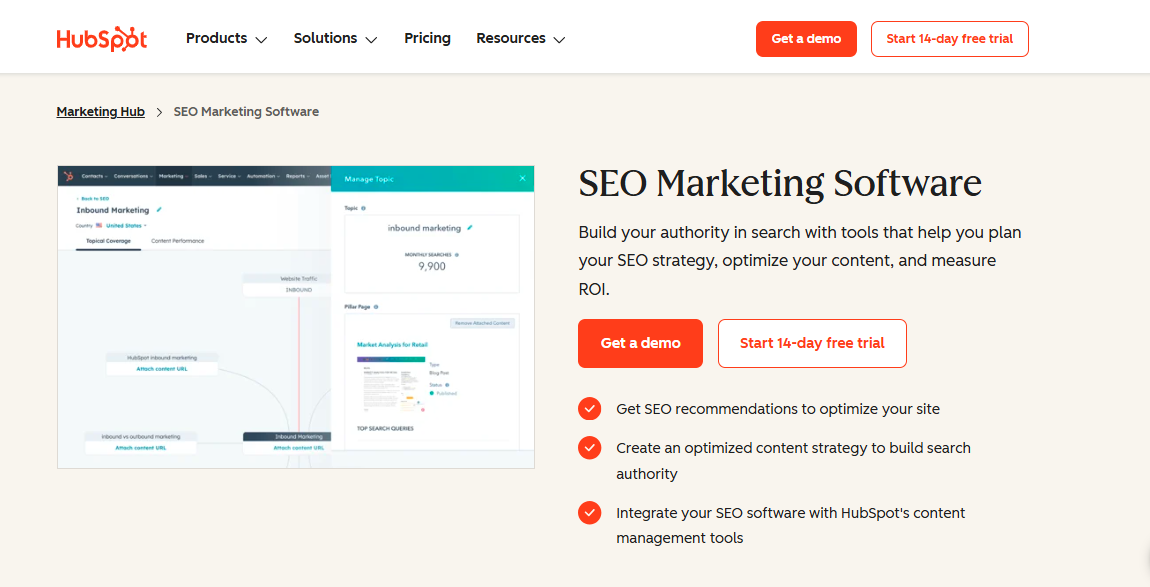
HubSpot SEO Marketing Software helps plan SEO strategy, monitor rankings, and track ROI. It scans websites, prioritizes fixes, and improves readability. Integrated with HubSpot CRM, the tool shares reports with key stakeholders for better decision-making.
Features:
- Monthly search volume and difficulty
- Integrates with Google Search Console
- HubSpot CMS content integration
Pros:
- Easy-to-use interface
- High-impact optimization suggestions
Cons:
- Limited rank tracking
- Requires full Marketing Hub purchase
Pricing: Free trial; Starter $15/mo; Professional $800/mo
2. SEMRush
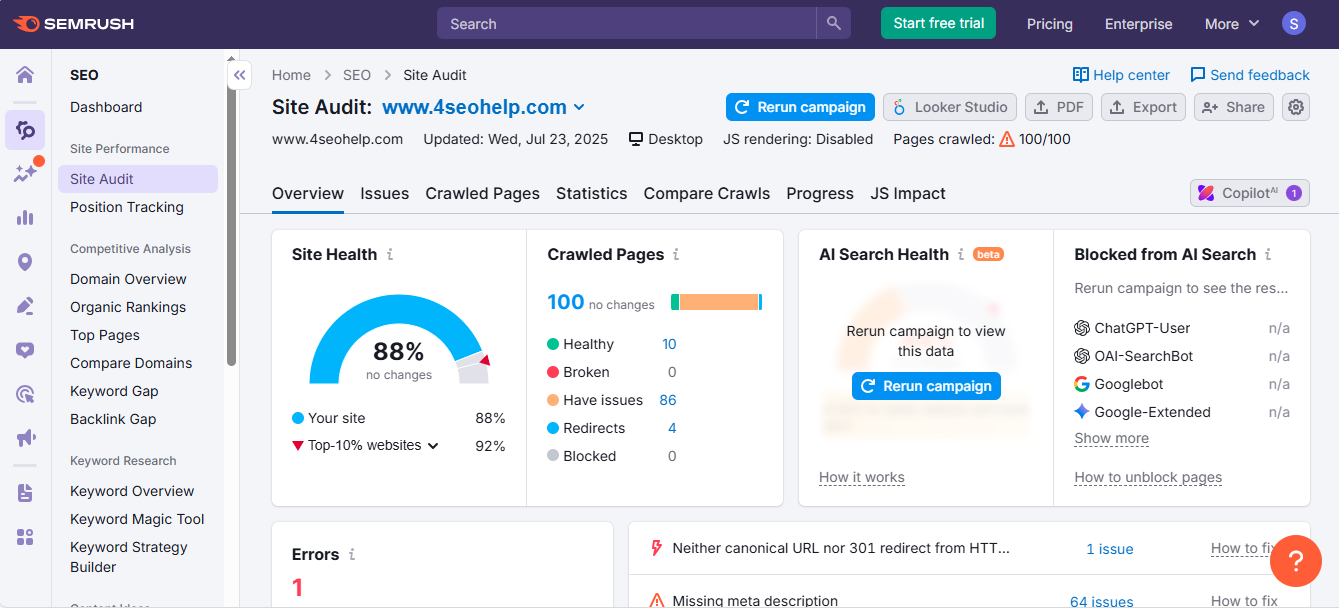
SEMRush offers powerful SEO and PPC rank tracking. It monitors algorithm updates, compares competitor visibility, and tracks keywords across locations. The “intent” feature helps marketers understand user search goals.
Features:
- Organic and PPC tracking
- Competitor domain comparisons
- ContentShake AI integration
Pros:
- Daily accurate data
- User-friendly interface
Cons:
- Multi-location tracking limited
- Pricey for small businesses
Pricing: Pro $129.95/mo; Guru $249.95/mo
3. Ahrefs
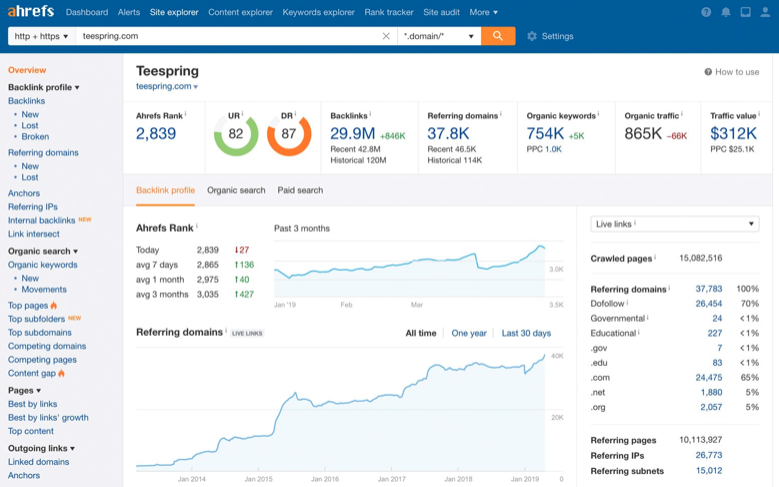
Ahrefs is a comprehensive SEO suite with rank tracking, keyword analysis, and backlink monitoring. It covers 190+ countries, offers competitor insights, and includes Share of Voice metrics. Scheduled reports help teams save time.
Features:
- Global keyword tracking
- Competitor analysis
- Backlink checker
Pros:
- Educational resources
- Built-in search engine Yep
Cons:
- Complex interface
- Expensive enterprise plans
Pricing: Lite $129/mo; Standard $249/mo; Advanced $449/mo
4. Moz
Moz provides keyword ranking, competitor insights, and optimization suggestions. It supports mobile and desktop tracking, helping marketers prioritize fixes for SEO success.
Features:
- Keyword optimization recommendations
- Competitor rank comparisons
- Custom audience segments
Pros:
- Extensive integrations
- Solutions for all business sizes
Cons:
- Outdated interface
Pricing: Standard $99/mo; Pro Medium $179/mo
5. Google Search Console
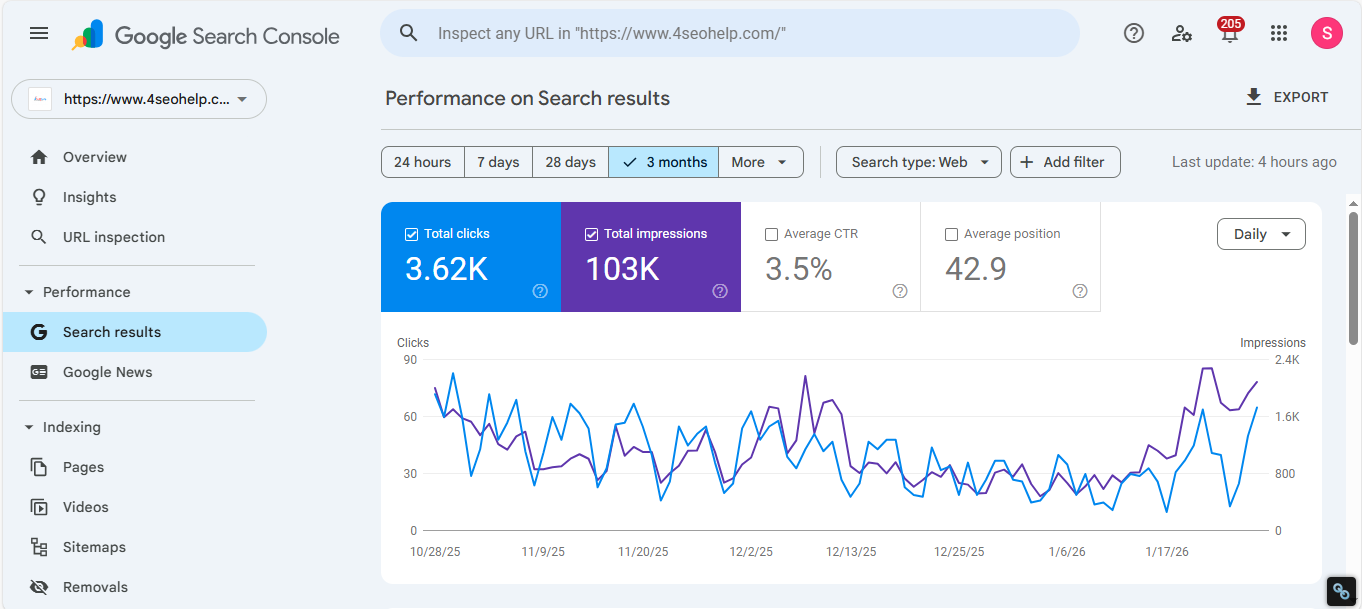
Google Search Console is a free tool providing keyword ranking, clicks, and site analytics. It integrates easily with other Google tools, offering a solid starting point for beginners.
Features:
- Search analytics
- Email alerts for issues
- Third-party tool integration
Pros:
- 100% free
- Easy to use
Cons:
- Limited keywords
- Only Google data
Pricing: Free
6. SERPWatcher by Mangools
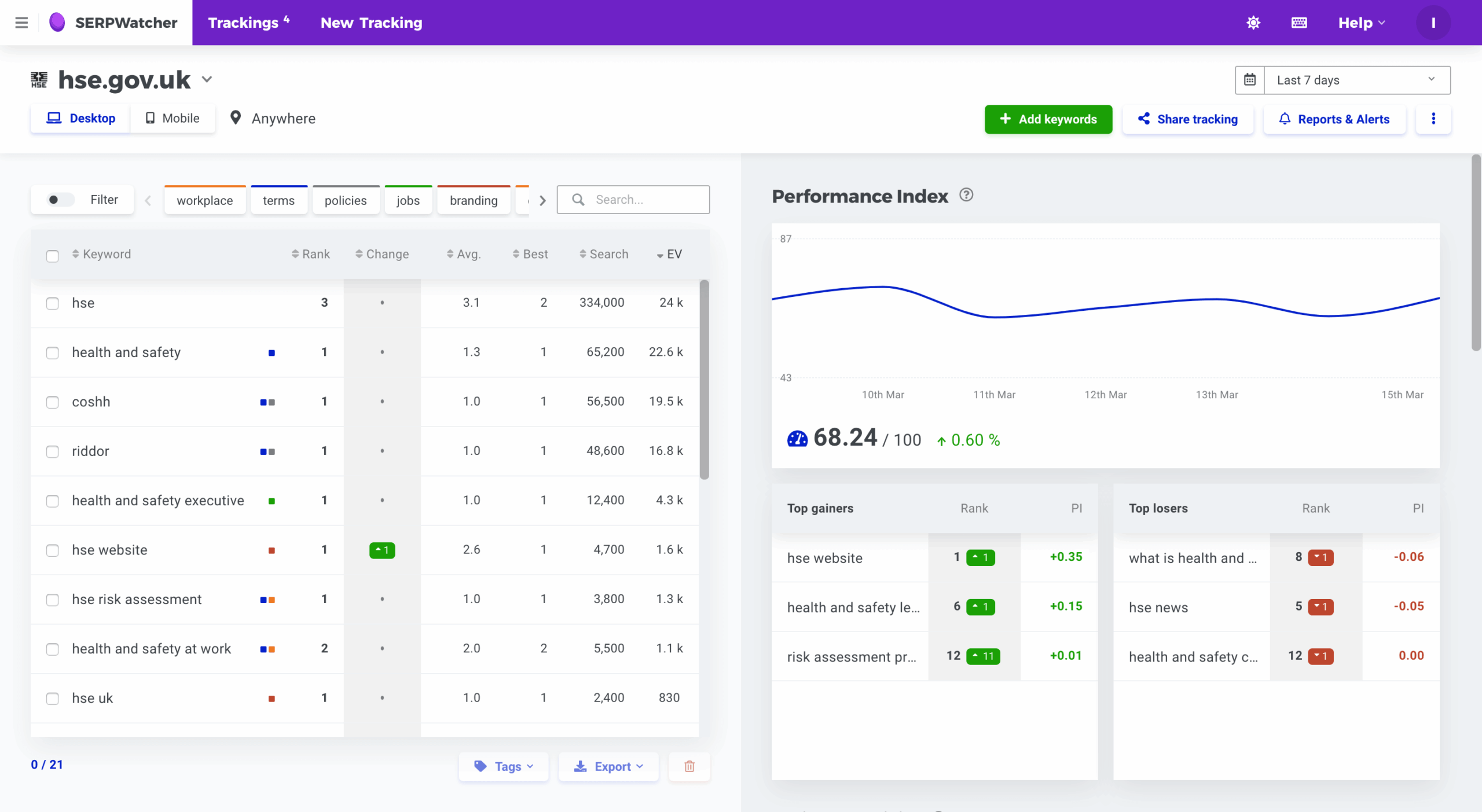
SERPWatcher tracks keyword rankings daily, supports 52,000 locations, and sends alerts for SEO improvements. Its clean interface suits beginners and small teams.
Features:
- Daily rank tracking
- Email alerts
- Multi-location support
Pros:
- Interactive reports
- Tagging and color organization
Cons:
- Only Google index
- Initial desktop/mobile choice
Pricing: Entry $29/mo; Premium $69/mo
7. SE Ranking
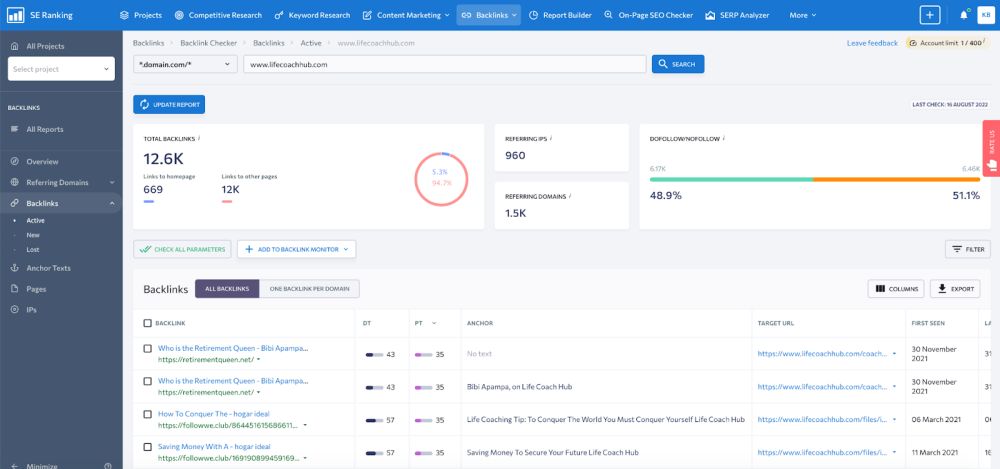
SE Ranking tracks multiple search engines, audits websites, and prevents keyword cannibalization. It suits agencies and in-house teams with competitor analysis and project management features.
Features:
- Keyword performance tracking
- AI-powered On-Page SEO
- Website audit tools
Pros:
- Unlimited projects with higher plans
- Competitor keyword tracking
Cons:
- Overwhelming interface
- Base tier limited projects
Pricing: Essential $65/mo; Business $259/mo
8. Nightwatch
Nightwatch combines AI capabilities with rank tracking, auditing, and multi-search engine support. Its dark-themed interface is visually appealing and easy to navigate.
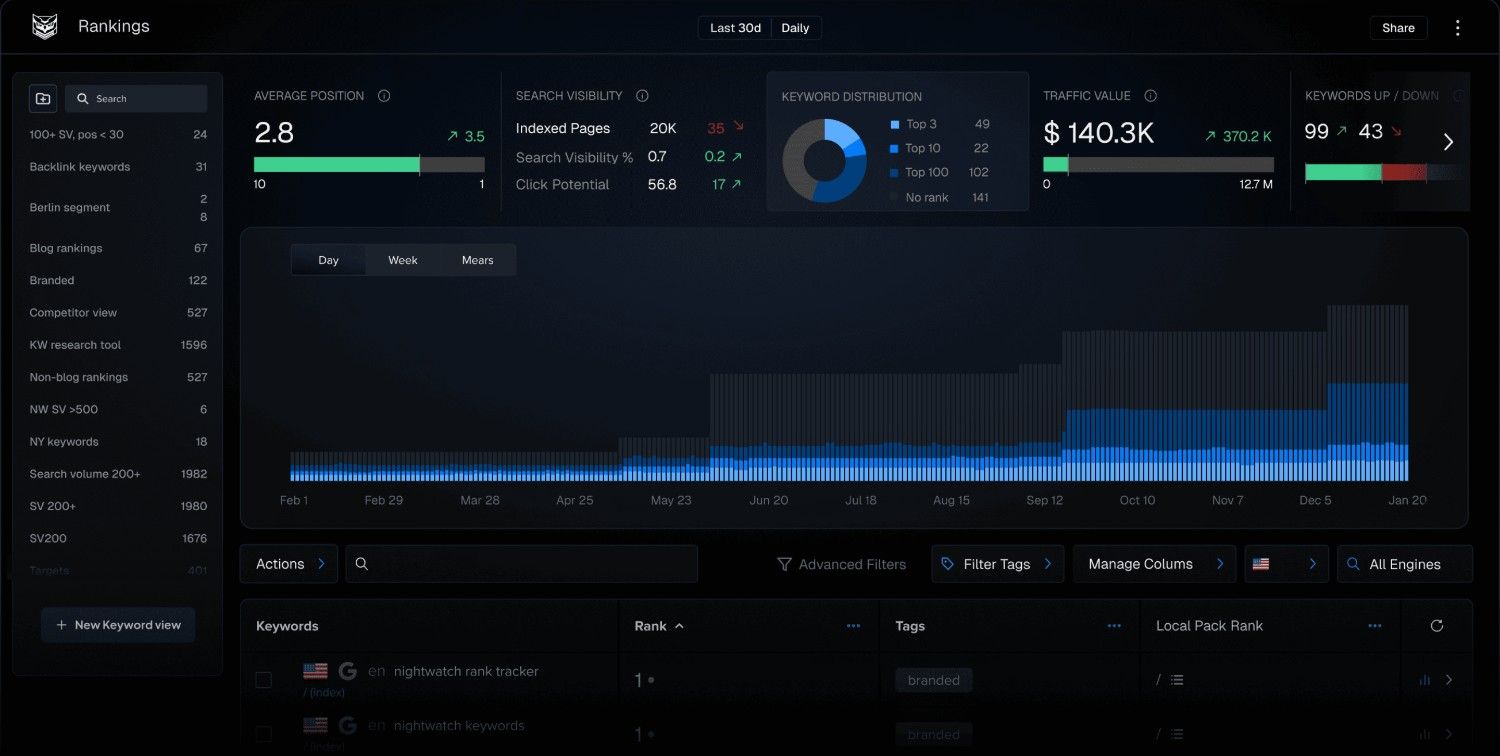
Features:
- ZIP code level tracking
- Website audits
- Multi-search engine support
Pros:
- Custom reports and alerts
- White-label reporting
Cons:
- Track up to five competitors
Pricing: $39–$99/mo depending on keywords
9. SEO Powersuite (Rank Tracker)
SEO Powersuite is a desktop platform offering unlimited keyword tracking, local ranking searches, and customizable dashboards. It supports Windows, Mac, and Linux.
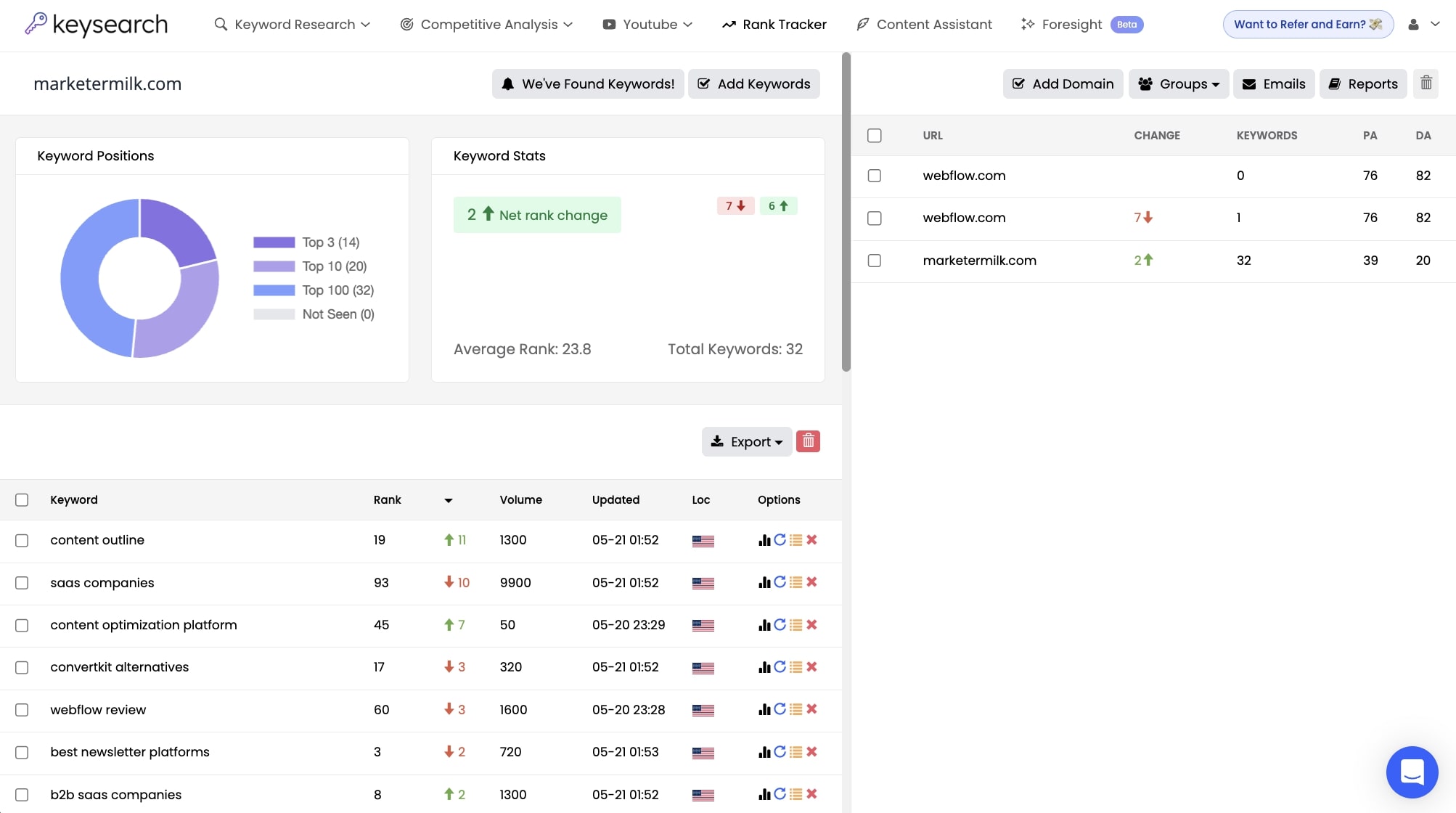
Features:
- Desktop and mobile SERP tracking
- Local rankings on 600+ search engines
- Fully customizable dashboards
Pros:
- Unlimited keywords
- Buy suite features individually
Cons:
- Free tier cannot save projects
- Enterprise tier needed for exports
Pricing: Free to $499/yr
10. Keyword.com
Keyword.com tracks keyword positions by city, ZIP code, or device. Free and low-cost tiers suit small businesses, while enterprise plans provide unlimited seats and reporting.
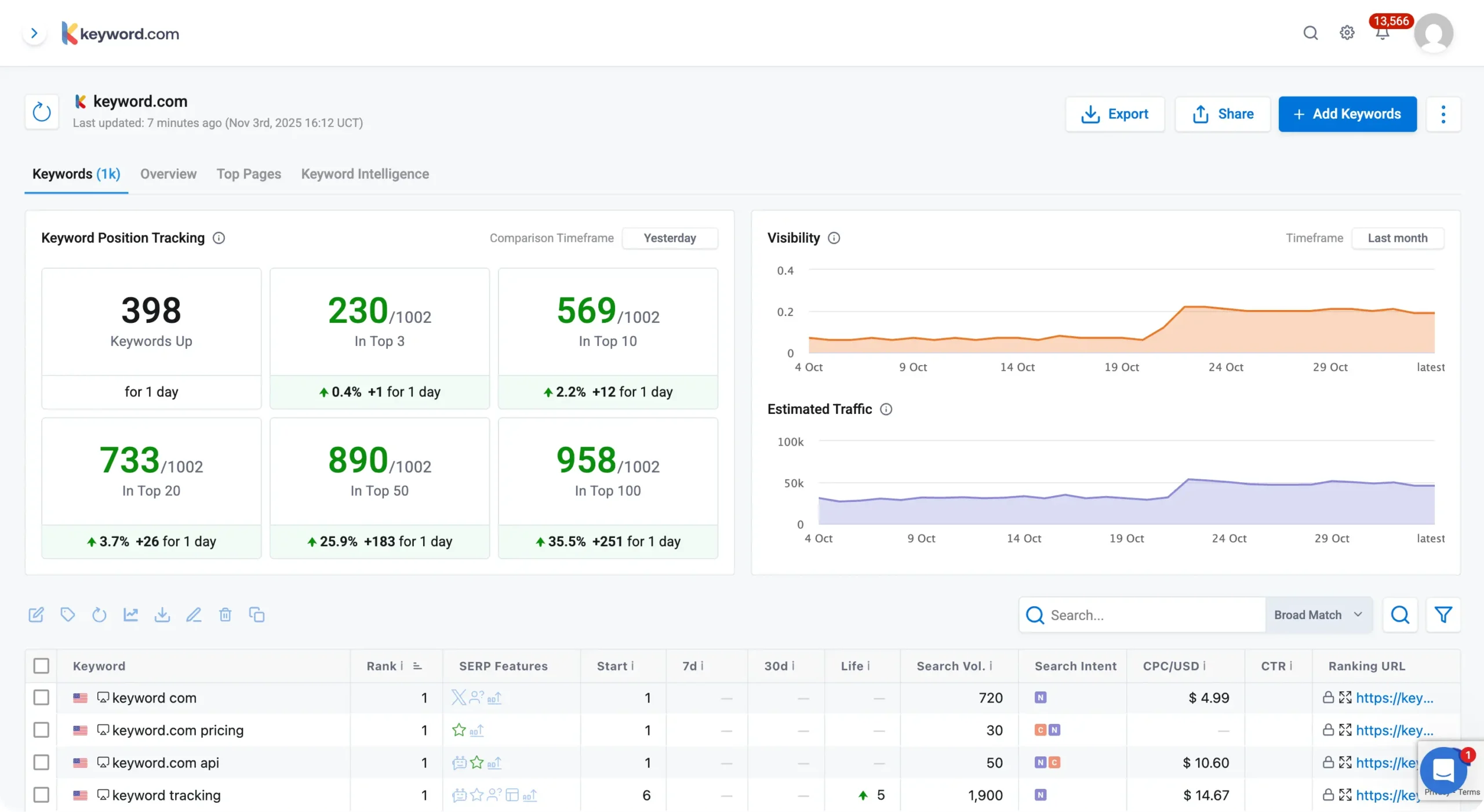
Features:
- City-level tracking
- Unlimited seats for paid tiers
- Branded reporting
Pros:
- Shareable dashboards
- Organize keywords by intent
Cons:
- Free tier limited
Pricing: Free; Business $4/mo
11. Sitechecker
Sitechecker provides keyword rank tracking, SEO audits, and competitor insights. Its integration with Google Search Console ensures accurate data, making it easy to track trends and make improvements.
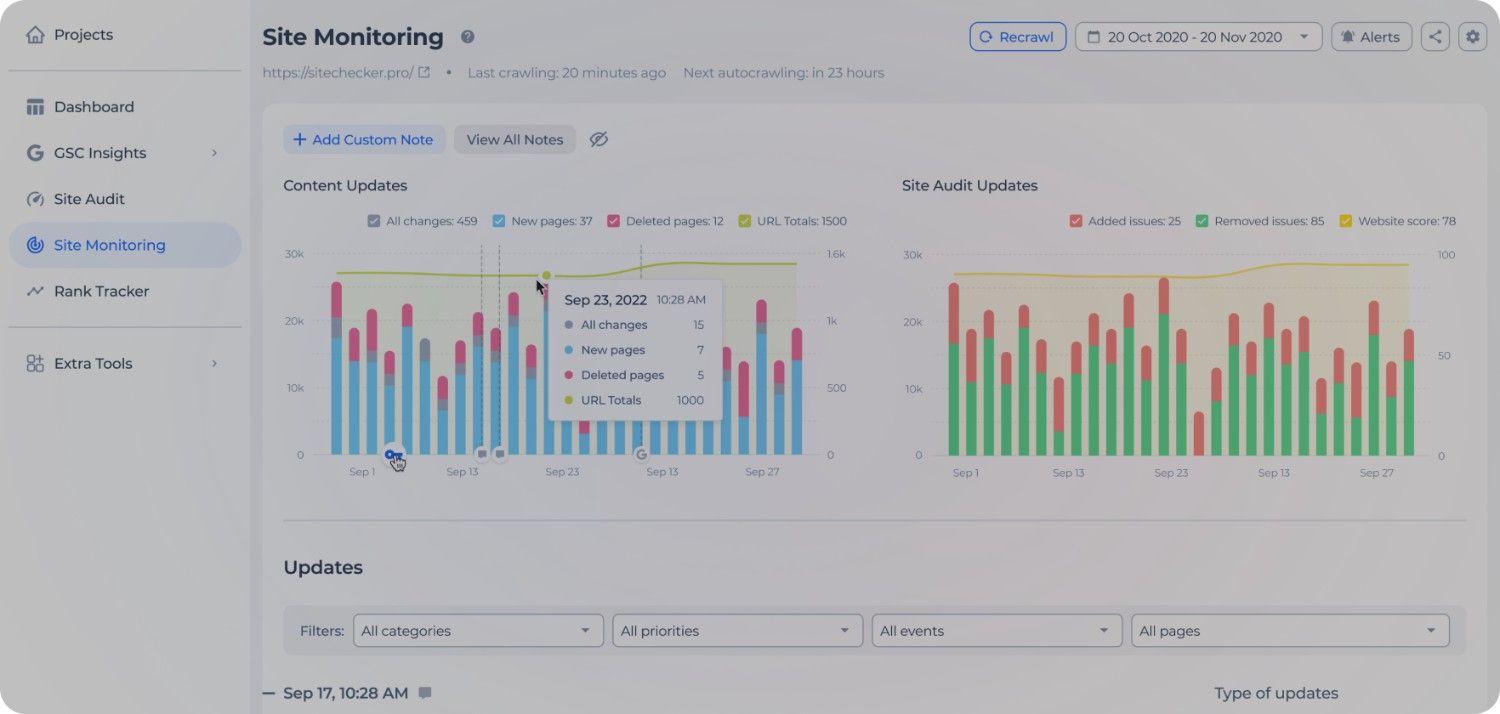
Features:
- GSC integration
- Keyword rank tracking
- SERP change monitoring
Pros:
- Easy-to-use dashboard
- Page-level analysis
Cons:
- Limited free plan
- No built-in PPC data
Pricing: $69–$1000/mo depending on tier
How to Choose the Right Rank Tracking Software?
Choosing the best rank tracker depends on budget, team size, and business goals. Cloud tools suit remote teams, while desktop applications help agencies track unlimited keywords offline.
Consider local and mobile tracking, competitor analysis, reporting capabilities, and integration options. Start with free tools if testing SEO or small campaigns, then scale to paid solutions for advanced tracking, automation, and detailed analytics.
- Consider team size and goals
- Track mobile and local rankings
- Integration with other marketing tools
- Choose free or paid plan
- Focus on accuracy and usability
Rank Tracking Tools Frequently Asked Questions (FAQs)
Rank tracking software helps businesses check their website’s position on search engines for specific keywords. It automatically monitors many keywords, shows historical trends, and creates reports. This saves time compared to checking rankings manually.
These tools simulate searches from different devices and locations to gather keyword ranking data. They update rankings daily or weekly and show changes over time. Advanced tools can separate technical SEO issues from content issues.
There are two main types: cloud-based and desktop-based. Cloud tools run online and can be accessed anywhere. Desktop tools install on a computer and work offline. Cloud trackers are good for remote teams, while desktop trackers suit agencies needing unlimited keyword tracking without recurring fees.
SEO agencies, in-house marketing teams, and local businesses benefit from rank trackers. Agencies monitor client campaigns and ROI. In-house teams track daily ranking changes and competitors. Local businesses can improve “near me” searches and Google Maps visibility.
A great rank tracker provides accurate keyword positions, competitor comparisons, and actionable SEO suggestions. It tracks mobile, desktop, and local rankings, allows integration with other tools, and provides reporting options.
Free tools are suitable for beginners or small businesses tracking a few keywords. Paid tools are better for agencies or large businesses because they offer daily updates, competitor tracking, multi-location monitoring, and unlimited keyword tracking.
Popular rank trackers include HubSpot SEO, SEMRush, Ahrefs, Moz, Google Search Console, SERPWatcher, SE Ranking, Nightwatch, SEO Powersuite, Keyword.com, and Sitechecker.
Rank tracking shows which keywords bring traffic and how your website ranks over time. It helps identify content or technical issues, measure marketing ROI, and compare with competitors.
Yes, most modern rank trackers can monitor keywords by city, ZIP code, or device type. This is essential for businesses targeting local customers or optimizing for mobile users. Accurate local and mobile tracking ensures better performance in relevant searches.
Consider your budget, team size, and SEO goals. Cloud tools are ideal for remote teams; desktop tools are good for offline use. Look for accuracy, competitor tracking, mobile and local support, reporting features, and integrations.
Also Check These