Search Engine Optimization Service Follows Latest Standards
Last updated: March 2026 | By [Author Name], Digital Marketing Specialist with 10+ years of SEO experience


Introduction
A professional Search Engine Optimization (SEO) service does far more than improve rankings – it builds your website’s long-term reputation, drives qualified traffic, and ultimately increases conversions and revenue. Just as individuals earn trust through credibility and expertise, websites earn authority through consistent, high-quality signals that Google and other search engines recognize and reward.
The SEO landscape evolves constantly. Google – which commands over 90% of the global search market – regularly updates its algorithms to better serve users. In 2026 and beyond, those updates have one clear direction: reward websites that demonstrate real Experience, Expertise, Authoritativeness, and Trustworthiness (E-E-A-T) while penalizing those that try to game the system.
This guide walks you through what it takes to keep your website climbing the SERPs in 2026 and beyond.
What Is E-E-A-T and Why Does It Matter?
Google’s E-E-A-T framework – Experience, Expertise, Authoritativeness, and Trustworthiness – is the lens through which Google’s quality evaluators and algorithms assess your content. Google added “Experience” to the original E-A-T model in 2022, reflecting a growing emphasis on firsthand, real-world knowledge over generic, research-only content.
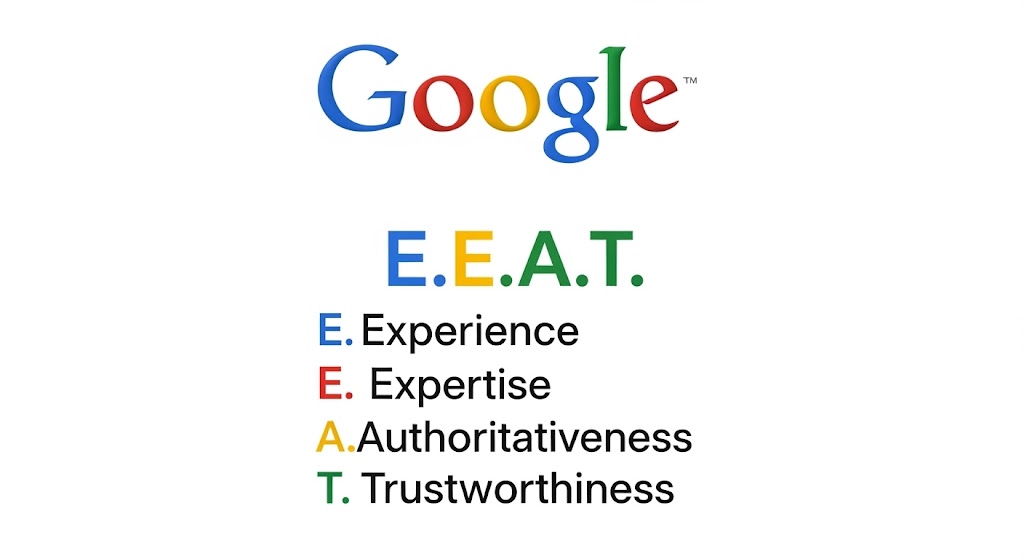
Here’s what each pillar means in practice:
- Experience: Has the author actually used the product, visited the place, or lived through the situation they’re writing about? Google now heavily favors content backed by real, lived experience – a product review from someone who purchased and tested the item will consistently outrank one written purely from spec sheets.
- Expertise: Does the content reflect deep, accurate knowledge of the subject? This is especially critical for YMYL (Your Money or Your Life) topics – health, finance, legal, and safety content – where misinformation can cause real harm.
- Authoritativeness: Is your brand or website recognized as a credible voice in your industry? Backlinks from reputable publications, industry awards, and mentions from established sources all contribute to this.
- Trustworthiness: This is the most important pillar. Google prioritizes sites that are technically secure (HTTPS), transparent about authorship, accurate in their information, and honest in their practices.
According to recent data, pages with strong E-E-A-T signals have a 30% higher chance of ranking in the top 3 positions compared to those with weak signals – and this gap has widened significantly through 2026.
1. Create People-First, High-Quality Content
Content quality remains the single biggest ranking factor. Google’s Helpful Content system – now applied globally across all languages – is designed to surface content that genuinely satisfies users, not content engineered purely for rankings.
What this means for your content strategy:
- Write from real experience. Share case studies, client results, personal insights, and firsthand observations. Generic content that simply rewrites what everyone else is saying faces steep ranking penalties in 2026.
- Go deep, not just long. While content exceeding 1,500–2,000 words tends to perform well for competitive topics, length alone is not the goal. Your content must be thorough, well-structured, and genuinely answer the user’s intent.
- Establish topical authority. Instead of publishing isolated blog posts, build content clusters – a cornerstone page covering a broad topic, supported by in-depth articles on subtopics. This signals to Google that you are a comprehensive resource on your subject.
- Keep content current. Outdated information erodes trust. Audit and refresh your existing content regularly, updating statistics, removing stale references, and adding new developments.
- Write for readability. Use plain language, short paragraphs, clear subheadings, and logical structure. Most readers scan before they read – make it easy for them to find what they need.
2. Build E-E-A-T Signals Across Your Website
Strong E-E-A-T is not just about individual articles – it reflects the credibility of your entire website and brand.
Practical steps to strengthen E-E-A-T:
- Publish detailed author bios. Every piece of content should include the author’s name, credentials, professional background, and links to their LinkedIn or industry profiles. Anonymous content scores poorly on trust signals.
- Add an About page and editorial policy. Explain who you are, how your content is produced, and what standards you follow. A transparent corrections policy further signals accountability.
- Showcase social proof. Customer reviews, case studies, testimonials, and before/after results all demonstrate real-world experience and help build trust with both users and search algorithms.
- Cite reputable sources. Link outward to authoritative references – industry studies, government data, respected publications. This shows Google that your content is grounded in verified information.
- Earn quality backlinks. A healthy backlink profile from respected, relevant websites remains a powerful authority signal. Focus on earning editorial links through genuinely useful content, guest contributions to industry publications, and digital PR – not buying links, which risks severe penalties.
3. Optimize for User Experience and Core Web Vitals
Google’s ranking systems use Core Web Vitals – measurable page experience metrics – as a ranking signal. A site that loads slowly, shifts layout unexpectedly, or takes too long to respond to user input will lose rankings regardless of content quality.
Key technical priorities:
- Page speed: Compress images, use modern formats (WebP), minimize render-blocking scripts, and leverage browser caching. Every second of load time delay reduces conversions.
- Mobile-first design: Google crawls and indexes your website as a mobile user. If your site does not deliver a seamless experience on smartphones and tablets, your rankings will suffer. Responsive design is non-negotiable.
- HTTPS security: An SSL certificate is a basic trust signal. Sites without HTTPS are flagged as insecure by browsers and are viewed unfavorably by Google.
- Fix technical errors: Regularly audit for broken links (404 errors), redirect chains, duplicate content, and crawl issues using tools like Google Search Console.
- Structured data (Schema markup): Implement schema markup to help Google understand your content and enable rich results in search – including FAQ dropdowns, how-to steps, review stars, and more.
4. Optimize for Featured Snippets and Voice Search
Featured snippets – the answer boxes that appear above standard search results – offer a powerful opportunity for visibility, especially as voice search continues to grow. Voice assistants almost exclusively pull from featured snippet content.
How to target featured snippets:
- Structure content to directly answer specific questions. Use clear, concise answers (40–60 words) near the top of your content, followed by deeper explanation.
- Use FAQ sections with question-and-answer formatting and FAQ schema markup.
- Format lists and step-by-step instructions with proper HTML (ordered or unordered lists) – Google parses structured lists easily.
- Target long-tail, conversational keywords that match how people ask questions in voice search: “How do I…”, “What is the best way to…”, “Why does…”
- Build a resource or learning center on your website – educational content with clear, structured answers is frequently selected for featured snippets.
5. Pursue an Ethical, White-Hat Link Building Strategy
Backlinks remain one of the strongest ranking signals in Google’s algorithm – but the quality of your links matters far more than quantity. A single link from a respected industry publication is worth more than hundreds of low-quality directory links.
What to do:
- Publish original research, data, and unique insights that other authors will naturally want to cite.
- Contribute guest articles to reputable publications in your industry.
- Build relationships with journalists and bloggers in your niche.
- Ensure your content is genuinely shareable – well-designed, easy to read, and genuinely useful.
What to avoid:
- Never pay for backlinks from link farms or private blog networks. Google penalizes thousands of websites for this every year, and recovery can take months.
- Avoid manipulative tactics such as click-bait, keyword stuffing, or cloaking. These black-hat techniques may offer short-term gains but carry a serious risk of manual penalties.
6. Use AI Tools Responsibly
With AI-generated content flooding the internet, Google has intensified its focus on identifying content that reflects genuine human expertise and experience. AI-generated content is not automatically penalized – but content that lacks original insight, personal perspective, or factual accuracy will struggle to rank.
Best practice: Use AI tools for research, outlining, and drafting – but ensure all published content is reviewed, refined, and enriched with authentic human expertise before it goes live. Your unique voice, firsthand experience, and critical thinking cannot be replicated by AI, and that is precisely what Google rewards in 2026.
7. Align Content With Search Intent
Understanding why a user searches for something – and matching your content precisely to that intent – is fundamental to modern SEO. Google categorizes search intent as informational, navigational, commercial, or transactional. Misaligning content with intent is one of the most common reasons well-written pages fail to rank.
For example, a page targeting “best SEO tools” should serve a commercial investigation intent – comparison tables, pros and cons, pricing information. A page targeting “how to do keyword research” should serve an informational intent – step-by-step guidance with practical examples.
Analyze the top-ranking pages for your target keywords before writing. They reveal exactly what format, depth, and angle Google is rewarding for that specific query.
8. Promote Content Strategically
Publishing great content is only half the work. Active promotion amplifies reach, earns links, and accelerates ranking.
Effective promotion channels:
- Share content through your email newsletter to your existing audience.
- Distribute through relevant social media platforms and industry communities.
- Reach out to influencers, bloggers, and journalists who cover your topic.
- Repurpose articles into video content, infographics, or podcast episodes to extend reach across formats.
Becoming a thought leader in your field – consistently publishing authoritative, original content – is one of the most sustainable long-term SEO strategies available.
Conclusion
SEO in 2026 is not about tricking algorithms – it is about deserving to rank. Google’s systems have become sophisticated enough to identify and reward websites that demonstrate genuine experience, deep expertise, established authority, and unwavering trustworthiness.
A professional SEO service that understands these principles will help you build the kind of online presence that not only climbs search rankings but sustains them – because it is built on a foundation of real value for real people.
Focus on E-E-A-T. Prioritize user experience. Create content that genuinely helps. The rankings will follow.
FAQs
Most websites see measurable improvements within 3 to 6 months. Competitive industries or newer sites may take up to 12 months. SEO is a long-term investment consistent effort delivers the best results.
On-page SEO covers optimizations on your own website content, keywords, page speed, and technical structure. Off-page SEO involves building your site’s authority externally through backlinks, brand mentions, and digital PR. Both are essential for strong rankings.
Not automatically. Google penalises low-quality, unhelpful content regardless of how it was created. AI content is fine as a starting point, but it must be reviewed and enriched with genuine expertise and firsthand experience before publishing.
Very important but quality matters far more than quantity. One link from a reputable industry site outweighs hundreds of low-quality links. Focus on earning editorial backlinks through original, valuable content. Never buy links it risks a Google penalty.
E-E-A-T – Experience, Expertise, Authoritativeness, and Trustworthiness. Google rewards content backed by real expertise and penalises generic, thin content. Transparent authorship, credible sources, and consistent quality are the foundation of sustainable SEO success.


Nice informative article and I would like to add one more topic in it voice search optimization which is a current trending topic in digital marketing. for making your site visible for voice search add answerable content on your site for a question like what, why, how, where related to your product or services
Thanks for sharing this article.It will be very helpful…