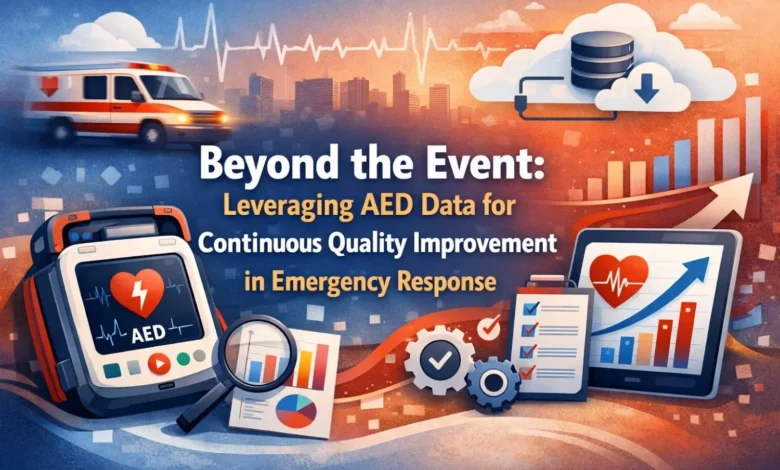
The primary mission of an Automated External Defibrillator (AED) is to deliver therapy during a cardiac arrest. However, its role should not conclude when paramedics assume patient care. The detailed, objective data recorded by modern devices during the event is a powerful asset for clinical continuity, program refinement, legal protection, and advancing public safety science. For organizations committed to excellence in emergency preparedness, the ability to retrieve and analyze this post-event information transforms an isolated rescue into a system-wide learning opportunity. This data-forward mindset is characteristic of clinically serious manufacturers like Kuteras Teknoloji, whose technology across professional, OEM defibrillator module, and public platforms is engineered to capture and communicate vital insights.
Today’s advanced AEDs are sophisticated data loggers. From the moment of activation to handoff, they typically record a comprehensive event record, including:
- Detailed Chronology: Time-stamped logs for power-on, pad placement, each rhythm analysis, shock delivery (if any), and CPR prompts.
- Electrocardiogram (ECG) Data: The complete heart rhythm tracing from before the first analysis through the entire event.
- Audio Recording: In many jurisdictions (with appropriate legal consent parameters), ambient audio is captured, documenting voice prompts, rescuer interactions, and background noise.
- CPR Metrics: For devices with accelerometer-based feedback, data on compression rate, depth, recoil, and hands-off time.
- Device Integrity Log: A history of recent self-tests, confirming the device was operationally ready prior to the event.
This data serves multiple critical purposes. For the responding EMS crew and receiving hospital, immediate access to the initial ECG strip can be diagnostically invaluable, guiding post-resuscitation care and intervention. For the organization that owns the AED defibrilatör , reviewing the objective timeline is crucial for quality improvement. How long did it take to retrieve the device? Was CPR initiated promptly? Were shocks delivered appropriately? This analysis can identify bottlenecks in internal response protocols, highlight the need for refresher training, or inform better strategic placement of AEDs.




From a legal and compliance standpoint, this objective data is irreplaceable. It provides a timestamped, factual record of the response, demonstrating that the device functioned correctly and that your personnel followed established procedures. This can be paramount in the rare event of an inquiry or litigation.
Accessing this data should be simple, secure, and designed for analysis. Leading manufacturers provide dedicated software or secure cloud portals where devices can be connected via USB or automatically upload data via built-in connectivity. The best systems allow for the easy generation of summary reports for medical directors and safety officers, turning raw data into actionable intelligence for program audits and drills.
Kuteras’s emphasis on data integrity stems from its engagement across the defibrillation spectrum. The need for clear, reliable data output is fundamental in professional biphasic defibrillator systems used for hospital code reviews and is a key requirement for OEM defibrillator module integration into diagnostic equipment. This experience ensures that their public automatic defibrillator products are not merely therapy delivery devices, but also robust information-gathering tools. When considering the total value of an AED program, the robustness and accessibility of this data management capability should be a key factor. It ensures your investment continues to yield insights long after a rescue is over, enabling a cycle of continuous improvement that systematically strengthens your program’s readiness, efficiency, and ultimate effectiveness for the next time it is called upon.