

In recent years, Pinterest has continued to grow as a powerful visual discovery and traffic-driving platform. What once looked like a rising trend has now become a key player in digital marketing and SEO strategies. While earlier predictions such as those from Rand Fishkin highlighted its potential, today Pinterest firmly ranks among the top social media referral traffic sources, alongside platforms like Facebook and Instagram.
Recent data indicates that Pinterest now has over 480–500 million monthly active users globally, a significant increase from 291 million in early 2019 and 335 million shortly after. This growth reflects its expanding role in content discovery, eCommerce, and search-driven behavior.
User demographics have also evolved. Pinterest is no longer as heavily skewed toward one gender as it once was. While women still make up a large portion of the audience (around 60–65%), male users have grown steadily to approximately 30–35%, showing broader adoption across different segments.
Additionally, Pinterest usage has expanded beyond the United States, with a strong and growing international user base. The platform continues to attract users interested in lifestyle inspiration, shopping, and visual search making it a valuable channel for marketers in 2026.
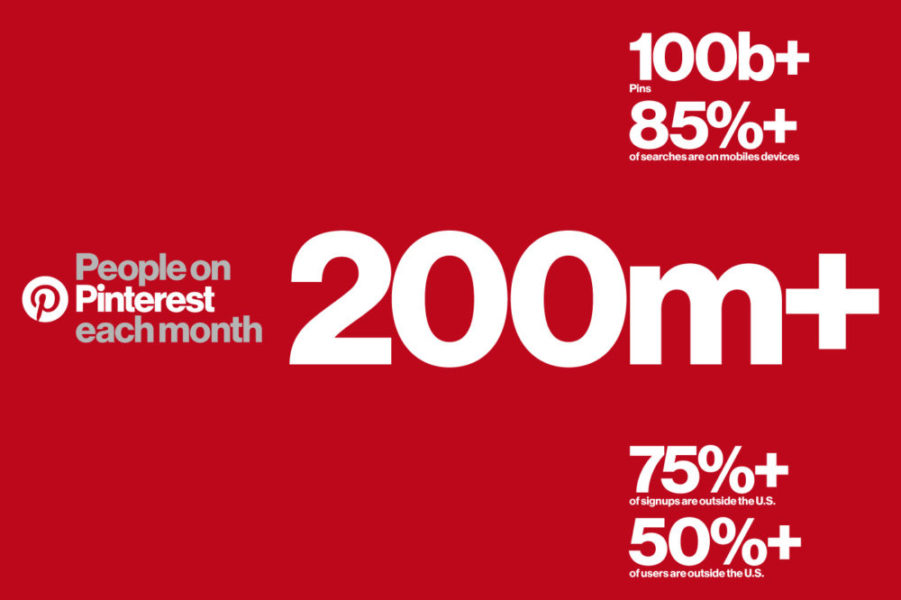
So, there are now over 480+ million users on Pinterest globally. But why does this matter?
As mentioned earlier, Pinterest remains one of the top social media referral sources for website traffic. This means you can drive consistent, high-quality traffic to your website for free without relying heavily on paid ads.
However, success on Pinterest isn’t automatic. To get real results, you need to follow the right strategies, optimization techniques, and content approach. So, let’s get started with the proven tips that work in 2026.
PINTEREST SEO TIPS
During the last Social Media Expo (SMX) East in New York, Anna Majkowski – software manager of the Pinterest search team – gave various useful suggestions to those who want to go into optimization on Pinterest, suggestions very similar to those taken up a few weeks ago by Chris Crum, and that find – adapted in Italian – within this post.
“Research is an important way for Pinners to find content about your business. If you use Rich Pins and if you have a verified account, your Pins will appear higher in the search results. Another fundamental way to improve your appearance in the search results is to improve the descriptions of your Pin “.
These (and other) valuable indications are found in the nine pages of the Pinterest for Business Best Practice Guide.
Still, on the subject of descriptions, the guide offers a small list of tips. For example:
- For recipes, describe the ingredients of the dish and how to cook it
- For fashion, including the characteristics of the garment, the designer or the season in which to wear it
- For travel, describe the location and the things you can do in that place
- For DIY, explain what it is, how to do it and what materials they need
- For photography, put the name of the photographer, the year and the subject
- For design, he talks about the designer, the media and publication
Basically, regardless of the type of content you are about to pin, it is important to be as descriptive as possible and insert all the relevant keywords, even if in the guide, it is not recommended to aim only at a long list of keywords or hashtags.
Another tip is to make the content easier to find within the Pinterest search engine. To do this, it is good to use high-quality images (at least 600 pixels wide), and to use the Pin It Button and the Rich Pin.
“The more people pin your content, the more relevant it becomes, ” says Pinterest. Who also recommends promoting your account on social media, through advertising and other means.
Pinterest also suggests pinning fresh content every day, and not just pinning your own content: “You can tell a richer story by adding pins from others,” they say. And they invite you to collaborate with bloggers and websites.
In short, engagement through the following, repins, likes, and comments are highly recommended, as is the creation of group boards to invite people who love your brand to contribute.
The bulletin board name should be a maximum of 20 characters long. Otherwise, you risk being truncated (a bit like for too long titles on Google ). Again it is good to put a description and use relevant keywords. It is also possible to choose a cover pin or an attractive cover image that pushes the user to “follow” on this board. The choice could fall on the image that has obtained the greatest number of repins over time.
Pinterest also recommends placing the most important boards at the top of the page: you can easily do this by dragging and dropping them where you want.
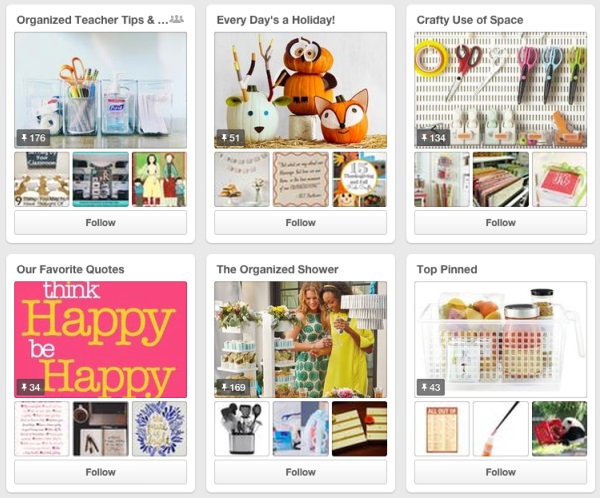
Another suggestion is to try to ” organize a small group of pins together that are able to tell a story and capture the imagination. “ An excellent example of boards organized by different themes, and which can, therefore, satisfy different audiences, is that of The Container Store:
Finally, it is interesting to note that Pinterest recommends linking external sites. The guide reads in fact: “a pin related to a film should lead to a trailer or a review, and a pin related to a product should lead where it is possible to buy it.”
PEOPLE ARE LOOKING ON PINTEREST WITH THE INTENTION TO BUY
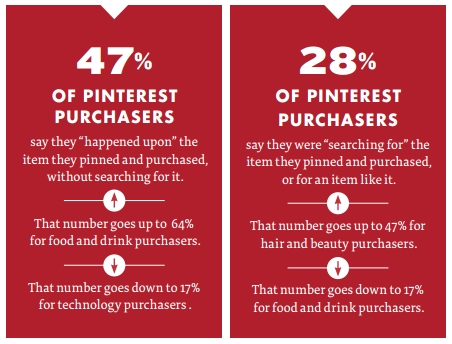
According to a Vision Critical study, 47% of users who buy on Pinterest say that they “stumbled” on the object they finned and bought without having searched for it.
But 28% – and this is significant – instead say that they were looking for just that object (or something very similar), and this number rises up to 47% when it comes to purchases related to beauty products or for hair:
PINTEREST GUIDED SEARCH
Launched in April 2014, Pinterest’s “guided search” is basically a system that allows you to refine the searches you do within the social network by inserting new terms related to the first, and consequently narrowing the range of action.
Based on a statement released by a Pinterest spokesperson to WebProNews a few weeks ago, Guided Search responds to the following signals:
- Interest in driving. The more interest the user shows in driving, the better it is classified. The clicks on the pins by the users are counted, and how often they are added to their boards.
- Quality of the results of the “compound query.” The quality of the third party pages to which the point of the pin is taken into consideration.
- User location. Pinterest claims to use this signal recently; in practice, depending on the geographic location where the user is located, different related terms may be shown:
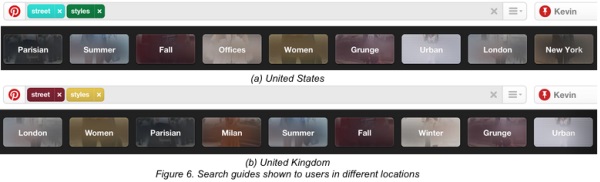
- User gender. Men and women have different interests and, therefore, can see different guides. Men click on guides on average to a greater extent, and do so on topics such as art, cars, fitness, health, fashion, and shopping; women tend to prefer food and drink, household items and technology.
- Current trend. If a large number of users show interest in a guide in a short period of time, it becomes popular, and can “position themselves” better for a certain number of days.
- Spam detection. Pinterest removes all pins considered spammy from its guides. Make sure you have read their privacy policy page to understand what type of content is illegible for Pinterest.
Guided Search seems to work much better on smartphones: clicks via iPhone are, in fact, 50% higher than those via the web, and the “propensity to click” is greater on weekends than on weekdays.
THE RESEARCH INTENT ON PINTEREST
The introduction of Guided Search has allowed Pinterest to understand users’ search queries better, and therefore their intent. By analyzing the adjacent queries within the same session, and the pins clicked later, Pinterest manages to refine and improve the discovery experience of subsequent searches.
Put simply, and engineers can imagine that if a user writes “turkey” in the Pinterest search, he will likely write “recipes” then.
This function can also be exploited by marketers and by those who have a commercial activity: for example, if you sell wedding dresses, but you don’t know which ones are more popular, using the Guided Search you can see that “wedding dresses” are related to ” wedding dresses in princess style, “vintage wedding dresses, “lace, “etc. You no longer have to guess what people want; it is Guided Search that will tell you.
OTHER FACTORS TO CONSIDER
Vincent Ng, author of the ebook How to Search Optimize Your Pins and Boards For Pinterest and Search Engines, offers several other useful tips and tricks. Among these:
- Better to have five pins for a specific term, rather than just one (or worse, none). It is too easy for a pin to get lost in an ocean of millions of pins.
- Pinterest is starting to work on a visual image recognition engine, which can understand (for example) that certain colors or certain shapes are those of a coffee table. Therefore, even if you don’t put that pin in the description of your coffee table photo, if a number of people in the past have used very similar images with that pin, that pin may be associated with your image.
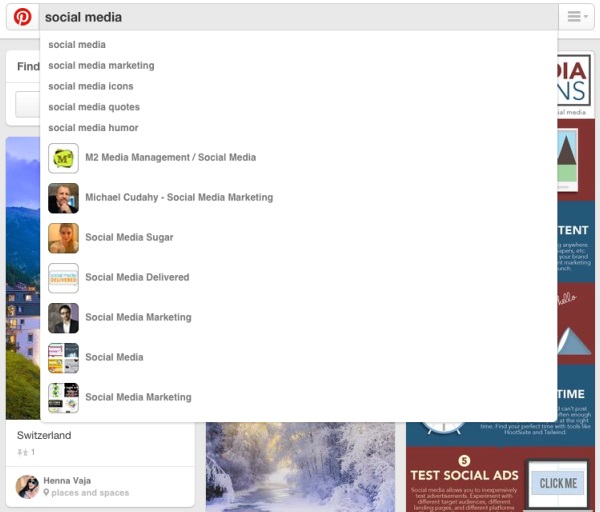
- More and more people search on Pinterest, instead of Google, for some types of queries (for example, those related to lifestyle ). If you want to understand which terms are most searched, start typing them in the search box and see what appears:
- Putting keywords at the beginning of the description can help, but perhaps today is no longer an important factor as it was long ago.
- The number of repins, on the other hand, seems to have a good weight still, but the “freshness factor” must also be considered ( a bit like what happens, in certain areas, on Google ).
CONCLUSION
As mentioned at the beginning, Pinterest is today among the social media capable of carrying more traffic than ever. Pinterest is also working as a search engine. Pinterest is enough for those who don’t know how to do SEO. Make sure you have to learn how to google search algorithms works.
According to BuzzFeed, Pinterest is the second social referrer, and it has the longest “life cycle”: it can bring traffic to posts even a long time after they are published. More than half of the traffic that BuzzFeed receives from Pinterest is, in fact, related to posts published more than two months earlier.
Maybe it won’t work for all types of content, but if you have a very “visual” site, if you sell products that do very well in photos and are mainly addressed to a female audience, Pinterest is probably a social network that will give you great satisfaction.
So I hope you liked this content so please don’t forget to share it with others and stay tuned for more amazing blog articles.
FAQs
Pinterest SEO works like a visual search engine, not just a social platform. The algorithm ranks content based on keyword relevance, image recognition, engagement signals (saves, clicks), and content freshness. Pinterest also analyzes both text and visuals to understand search intent more accurately.
The key ranking factors include pin quality (engagement), domain authority, consistency, and topical relevance. Additionally, Pinterest’s AI now evaluates visual content along with keywords, meaning your images must match your titles and descriptions.
Yes, but the strategy has evolved. Instead of keyword stuffing, Pinterest now favors long-tail, intent-driven keywords placed naturally in titles, descriptions, boards, and profiles. This helps match highly specific user searches and improves visibility.
Consistency matters more than volume. Posting fresh, original pins regularly (around 5–25 per day for active accounts) helps improve reach and authority. The algorithm prioritizes creators who consistently publish new content rather than posting in bulk occasionally.
Common mistakes include using low-quality or horizontal images, ignoring board optimization, inconsistent posting, and weak keyword usage. Pinterest also penalizes repetitive or duplicate content, so creating fresh and unique pins is essential for growth.


Hi Sonu, that’s amazing. Pinterest is really a good source for getting traffic. Thank you for sharing this wonderful information.
This article is very informative. Kindly share more articles with me. I shall be very thankful to you. Thanks for posting such an informative article.
Great Post, Thank for sharing.
Ys Sonu Singh sir
It’s Very Nice tips for Pinterest SEO and for Boost your Social Media Marketing…
Thanks
Pretty nice post It’s actually a great and useful piece of information.
Very interesting post and very well organised! You have done a very good review
I want to know how to rank my website.
You might have well-researched and structured weblog content material, but no improved ranking is coming via.
Pinterest seo is really an interesting and effective way to give a boost to your business. Thanks for sharing your great insights.
Hello,
It is worth to read your blog post because here I know about some new strategies about Pinterest, that I will implement on my Pinterest account.
Thank you very much, dear!!
hey great!! very great blog to read
Thank you for this valuable information!! Simply I want to say that your article is very helpful, it is very clear.
A great informative post. This article has brightened my knowledge about Pinterest.Thanks for sharing useful information. It will be very helpful.
It’s really good to read your blogs, thank you to sharing such good information.
Very informative post cos now i know a thing or two about pinterest SEO…
Pinterest is so much better than Instagram. While I love Instagram, the features of Pinterest are too hard to over-rule. Pinterest SEO optimization has helped us place a lot of our client photos on all the right places to make it work. The article is precisely the information you need to make the best out of your Pinterest account.
Thanks for sharing such informative content, keep posting such valuable content.
I loved your blog post and the way you have written.