What Were Facebook Instant Articles? (2026 Update: Why They’re Gone and What Publishers Use Now)

If you searched for this hoping to set up Facebook Instant Articles for your site in 2026 – stop right there and save yourself the time. Facebook Instant Articles no longer exists. Meta pulled the plug on it in April 2023, and the feature has not come back in any form. This guide has been rewritten to reflect that, walk through what actually happened, and point you toward what publishers use instead today.
A Quick Recap: What Instant Articles Was
Facebook launched Instant Articles in 2015 and opened it up to all publishers on April 12, 2016, at that year’s F8 conference. It was Facebook’s answer to Google’s AMP project – a stripped-down HTML5 article format that lived inside the Facebook app itself, rather than sending mobile users out to a publisher’s website. Facebook claimed load times up to 10x faster than a standard mobile web article, and publishers like the Guardian, National Geographic, BBC, and the New York Times signed on early to test it.
The pitch was simple: readers get near-instant load times without leaving Facebook, and publishers get to keep their branding, ad placements, and analytics tools (Chartbeat, comScore, Adobe Analytics, and others were all supported).
What Actually Happened to It
This is the part most older guides on this topic skip, and it’s the part that actually matters if you’re researching this in 2026.
Cracks started showing early. The New York Times pulled out in 2017, saying links back to its own site simply monetized better. The Guardian left around the same time, citing what its then-CEO called “woeful” financial returns. Forbes, Hearst, and Vice scaled back too. The core problem publishers kept running into was monetization and control – Instant Articles could drive traffic, but it rarely drove more revenue than a well-optimized page on the publisher’s own domain, and publishers didn’t own the reader relationship the same way.
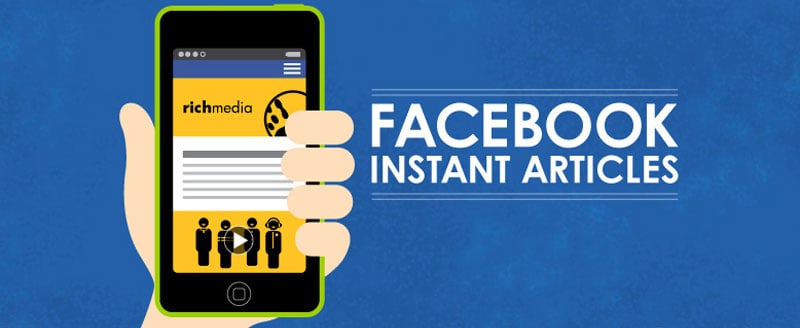
Then, in October 2022, <cite index=”2-1,2-2″>Meta announced it was shutting down Instant Articles entirely, saying less than 3% of what people see in Facebook’s Feed are posts linking to news articles</cite>, and that <cite index=”6-1″>the company was realigning around video as its most engaging format</cite>. <cite index=”7-1″>The shutdown went into effect in mid-April 2023</cite>, closing the book on Instant Articles after seven years. Once support ended, clicking a news link on Facebook simply took users to the publisher’s regular mobile site – no different from any other outbound link.
If you’re on Facebook checking whether IA is “worth setting up” in 2026: there’s nothing left to set up. The program, the sign-up process, and the publishing tools referenced in older guides no longer exist.
Its Old Rival Isn’t in Great shape Either
The original article compared Instant Articles to Google AMP, so it’s worth updating that half too, since a lot of the same logic applies. Google AMP technically still exists, but it’s been quietly stripped of the advantages that made it worth the trouble:
- Google removed AMP as a requirement for the Top Stories carousel back in June 2021, alongside <cite index=”20-1″>removing the AMP badge from search results and ending any ranking advantage AMP pages once had</cite>.
- <cite index=”23-1,23-2″>Google officially retired its AMP Cache serving system on July 1, 2026</cite>, along with the AMP Viewer, meaning clicks on AMP pages in Google Search now go straight to the publisher’s own site instead of a Google-hosted copy.
- <cite index=”20-1″>By 2026, most major publishers – including the Washington Post, CNBC, and Vox Media – had already migrated off AMP</cite>, with Core Web Vitals now doing the job AMP used to do.
The pattern across both platforms is the same: the “walled-garden fast page” model of 2015–2016 lost out to plain old fast, well-built websites.
What Publishers Actually Use Instead in 2026
From working with publisher and content clients through this transition, here’s what filled the gap in practice, roughly in order of how common it’s become:
- A genuinely fast native site. This is the real replacement. Modern frameworks (Next.js, Astro, Nuxt) plus edge hosting (Cloudflare, Vercel, Netlify) get load times that match or beat what Instant Articles or AMP ever delivered – without giving up ownership of the page, the ads, or the reader data.
- Core Web Vitals optimization as the actual ranking lever, since Google now scores real-world performance (LCP, INP, CLS) rather than rewarding a special page format.
- Facebook Reels and short-form video, because that’s genuinely where Meta has redirected its own distribution weight – if you want organic reach from Facebook in 2026, it leans video-first, not article-first.
- Owned channels – email newsletters and, for many publishers, direct app or push notifications – to reduce dependency on any one platform’s algorithm after watching both IA and AMP get sunset.
A Practical Note From Working With Publishers on This
The recurring mistake we still see: teams that invested heavily in “platform-native” formats (IA, AMP, or the next one that comes along) treated them as a shortcut around doing the boring work of a fast, well-structured website. When Facebook or Google withdrew the special treatment, those sites had nothing to fall back on. The publishers who came through this cleanest were the ones who used Instant Articles or AMP as a bonus distribution channel while still investing in their own site’s speed and structure the entire time. That’s the actual lesson from the IA/AMP era, more than any specific setup steps.
Frequently Asked Questions
No. Meta shut the program down in April 2023, and it hasn’t been relaunched. There’s no sign-up flow, publishing dashboard, or feed submission process left to use.
Meta said news links had become a tiny share of what people see in Feed (under 3%), and that the company was refocusing on formats like video that better matched how people were actually using the app. Publisher pullback over weak monetization on Instant Articles pages was also a major factor in the years leading up to the shutdown.
They no longer render as Instant Articles. A link that used to open the fast in-app format now behaves like any normal outbound link and sends the reader to the publisher’s regular mobile website.
Not really, and it’s fading for the same reasons. AMP lost its Top Stories requirement and ranking perks back in 2021, and Google shut down the AMP Cache and Viewer entirely on July 1, 2026. Most major publishers have already moved off it in favor of fast native pages measured by Core Web Vitals.
A well-optimized native website is now the standard recommendation – fast hosting, modern image formats, minimal render-blocking JavaScript, and Core Web Vitals as the benchmark – combined with owned channels like email and, if organic reach from Facebook matters, short-form video/Reels rather than article links.



Appreciate for sharing information. Highly relevant post that provides all knowledge and information about instant articles. Highly recommended post